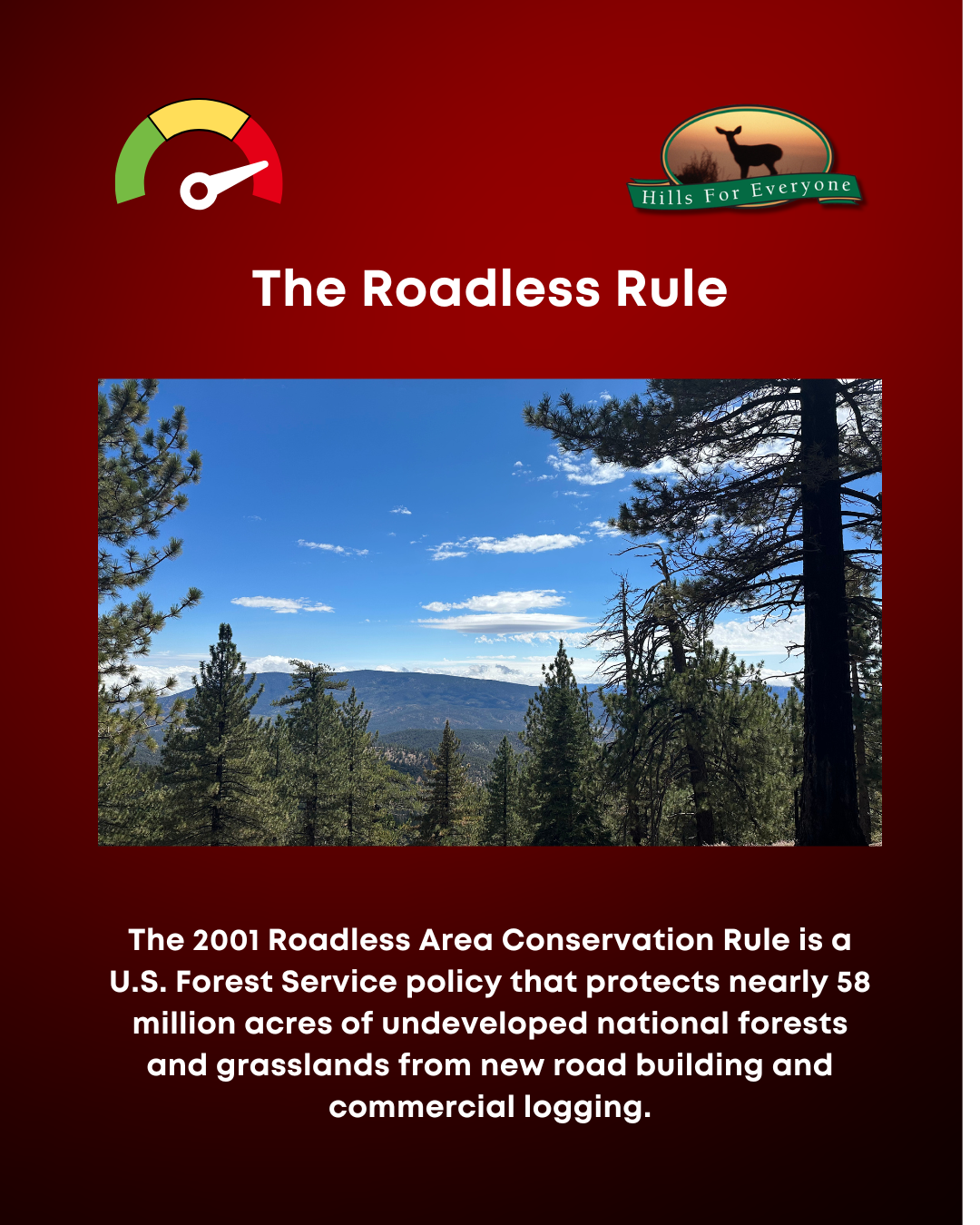
The 2001 Roadless Area Conservation Rule is a U.S. Forest Service policy that protects nearly 58 million acres of undeveloped national forests and grasslands from new road building and commercial logging.
The Roadless Rule stops the creation of new roads in designated inventoried roadless areas.
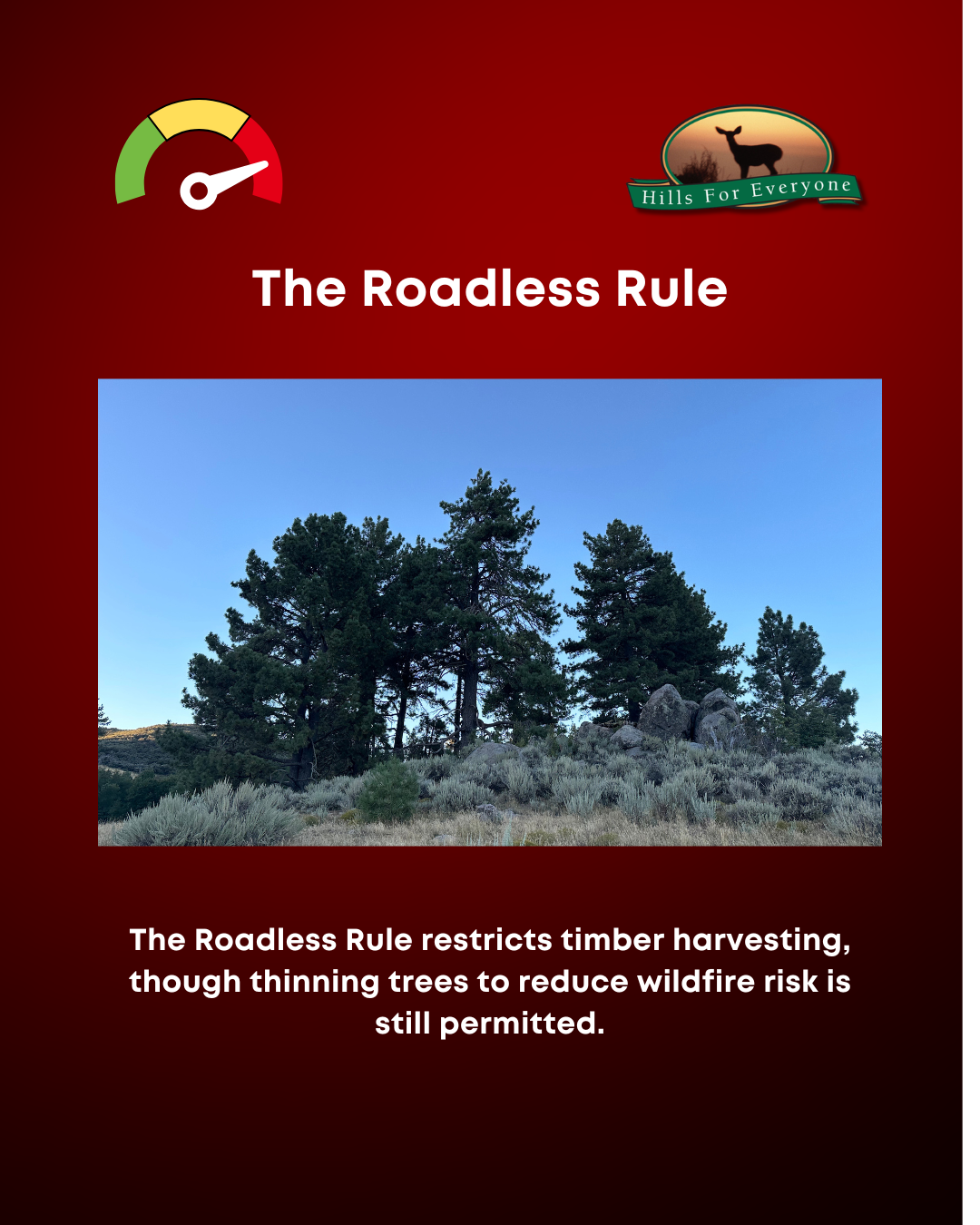
The Roadless Rule restricts timber harvesting, though thinning trees to reduce wildfire risk is still permitted.
The Roadless Rule protects hundreds of municipal watersheds that supply drinking water.
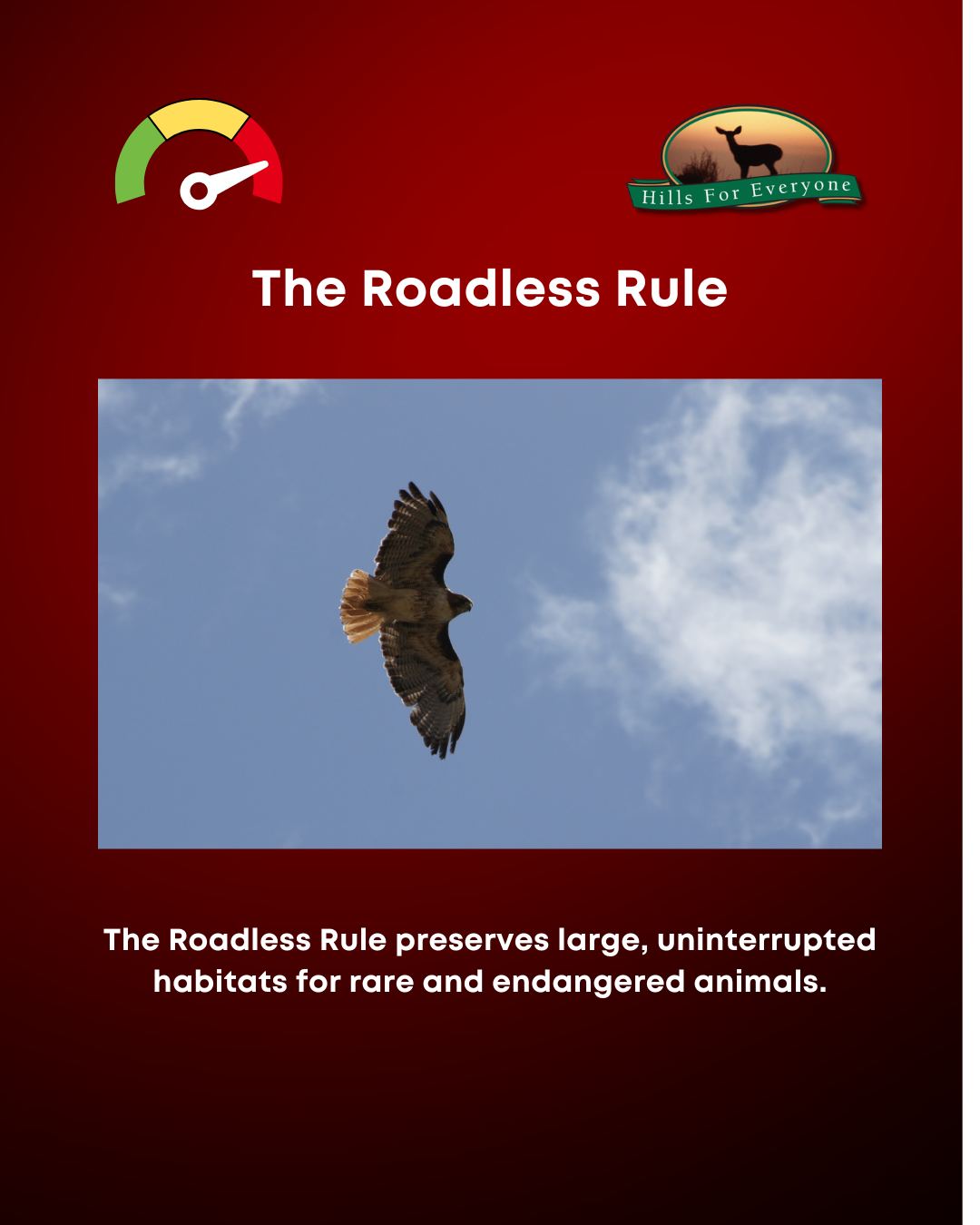
The Roadless Rule preserves large, uninterrupted habitats for rare and endangered animals.
The Roadless Rule reduces the wildfire ignition risk due to limited road accessibility–most roads are ignitions hotspots.
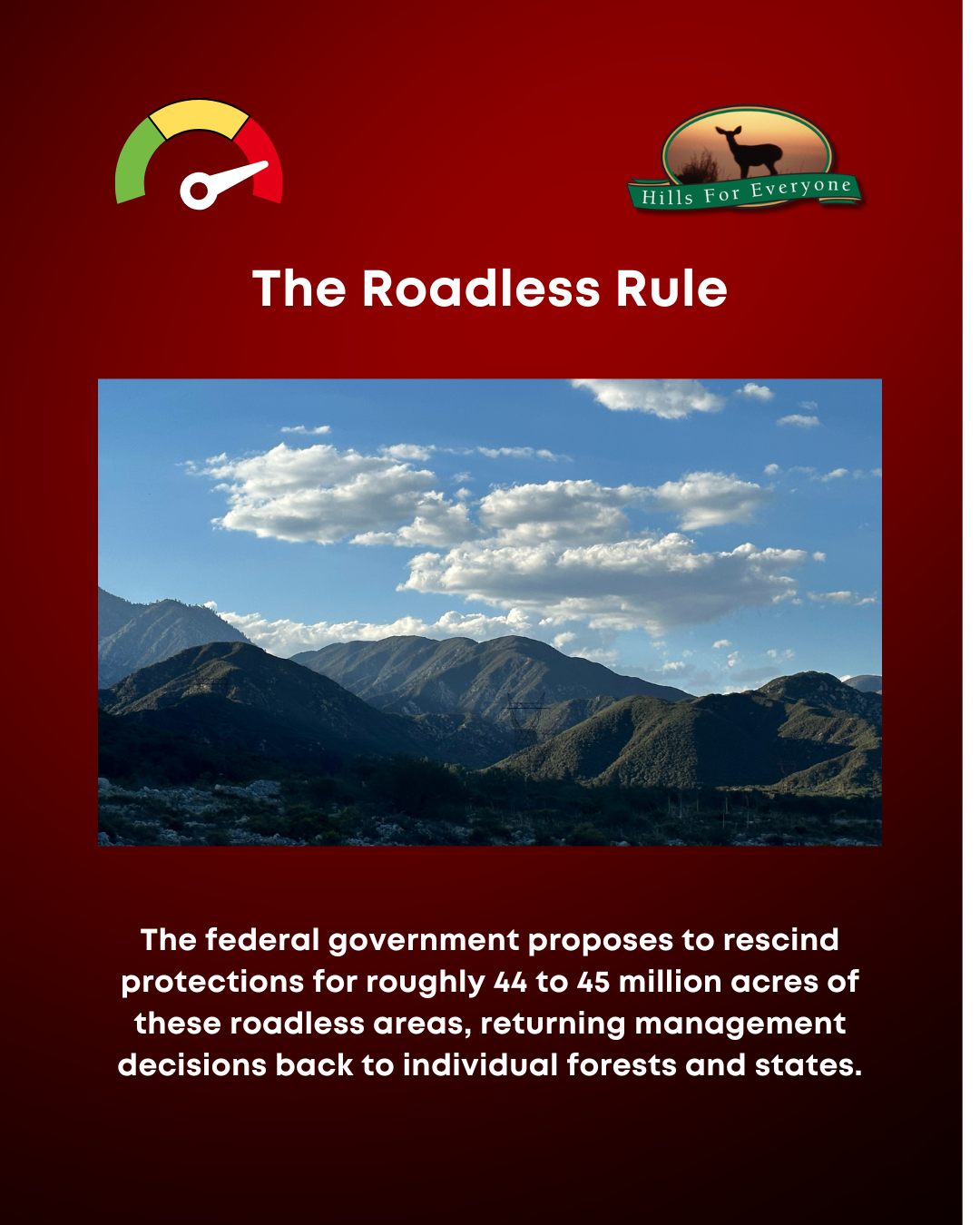
The federal government proposes to rescind protections for roughly 44 to 45 million acres of these roadless areas, returning management decisions back to individual forests and states.
California has approximately 4.4 million acres of protected roadless areas. This accounts for roughly 21% of the state’s 21 million total acres of national forest land.
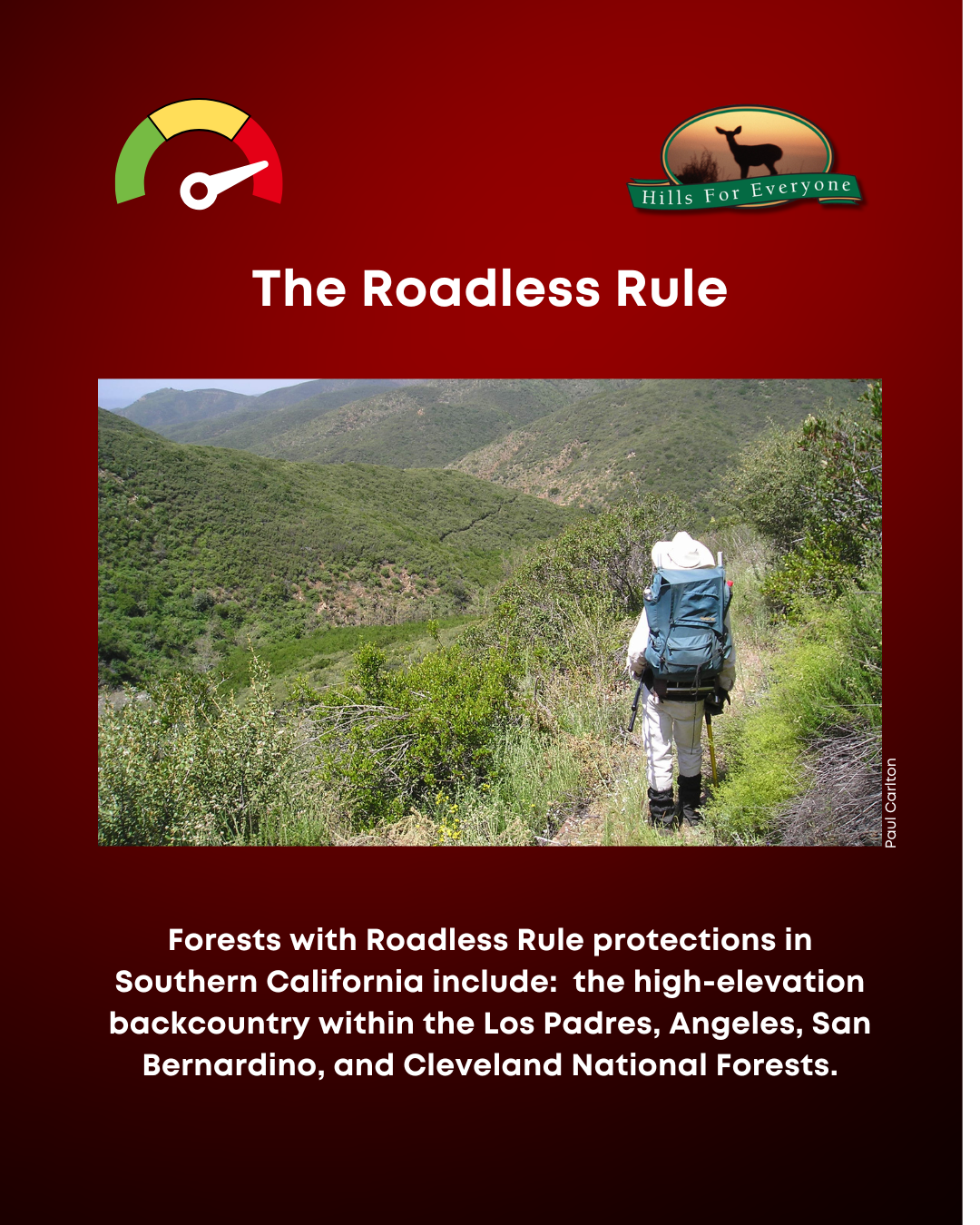
Forests with Roadless Rule protections in Southern California include: the high-elevation backcountry within the Los Padres, Angeles, San Bernardino, and Cleveland National Forests.
This week, the federal government released a proposed rule change that rescinds the protections of the Roadless Rule and allows for the addition of roads, logging, and more harmful activities on forest lands.
The comment portal is expected to open this week and close at midnight on September 21, 2026.
Submit your comments to: https://www.regulations.gov/
Tell the feds you oppose the rule change.