It’s Biodiversity Week – September 5 – 13th.
We hope to educate you on some of the cool plants and animals in the Puente-Chino Hills Wildlife Corridor.
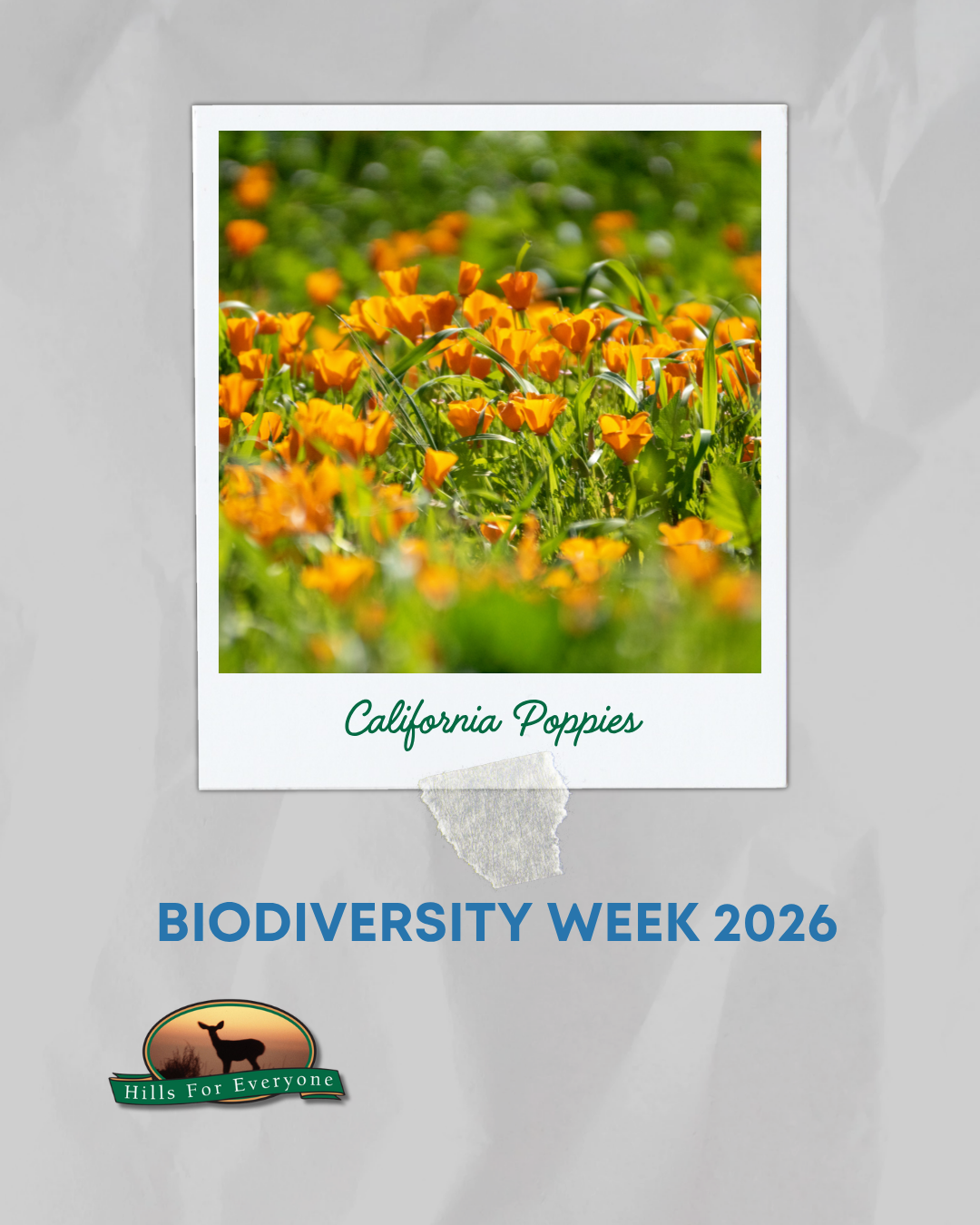
Day 1: California poppies provide protein-rich pollen for native bees, butterflies, and other beneficial insects. Their seeds and foliage help feed wildlife, supporting a richer, healthier native habitat. As drought-tolerant native plants, they add color and resilience to California’s grasslands and hillsides.
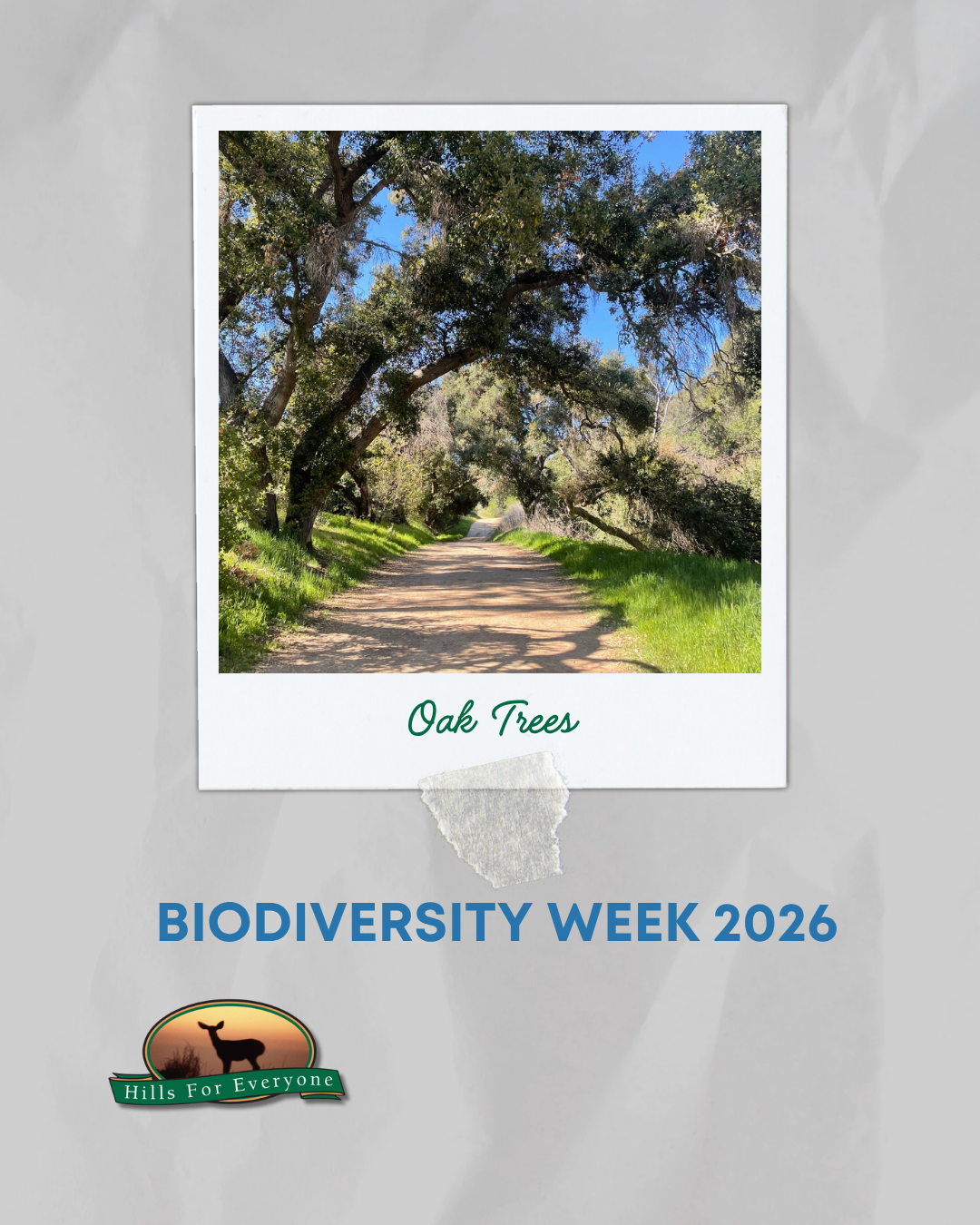
Day 2: Oak trees provide food and shelter for birds, mammals, insects, and other wildlife. Their deep roots help hold soil in place and protect nearby creeks from erosion. Native oaks also offer shade and help keep California’s landscapes healthy and resilient.
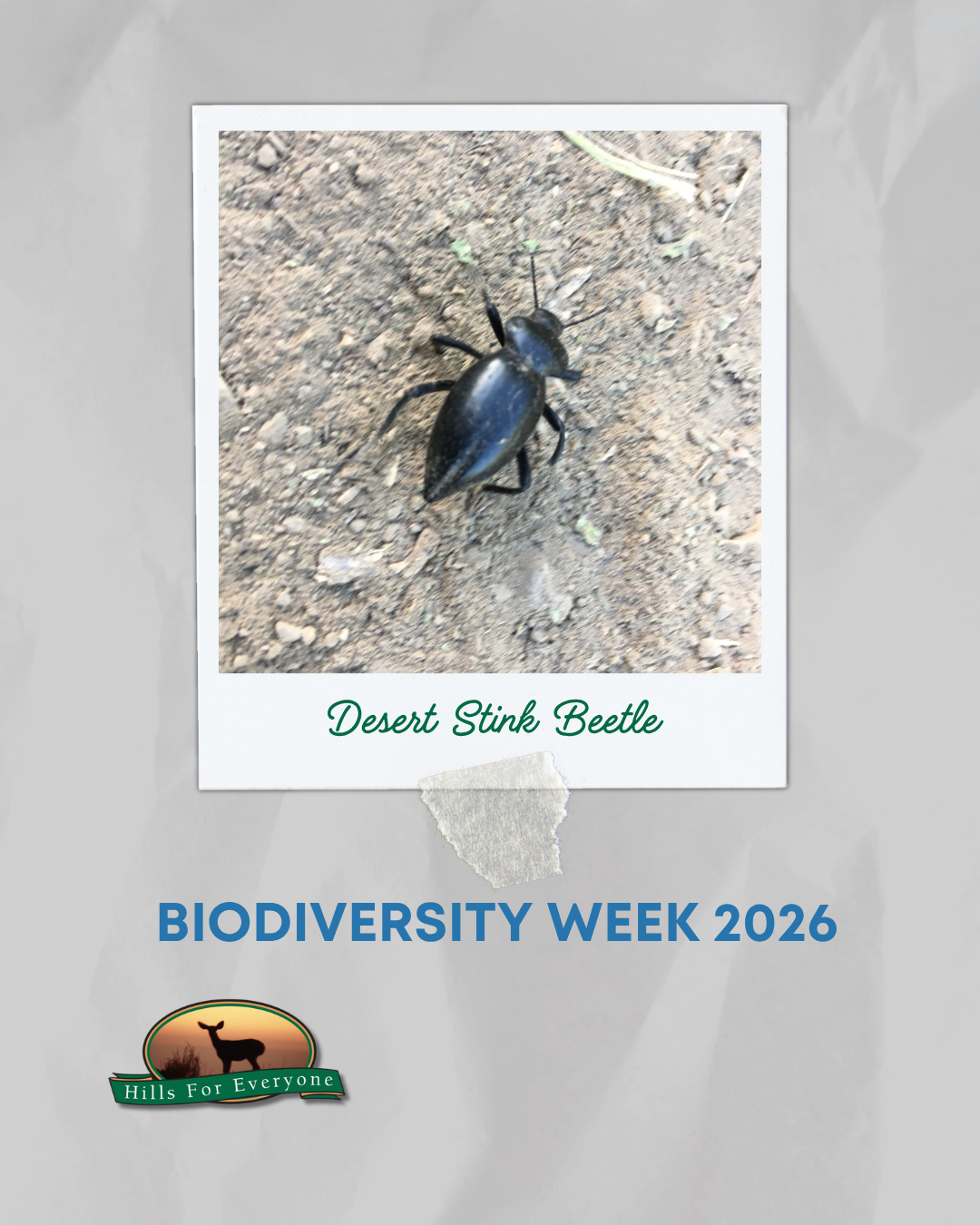
Day 3: Desert stink beetles are tough insects that live in dry places and help clean up dead plants and animals. They provide food for birds, lizards, and other wildlife. When threatened, they release a strong smell to discourage predators.
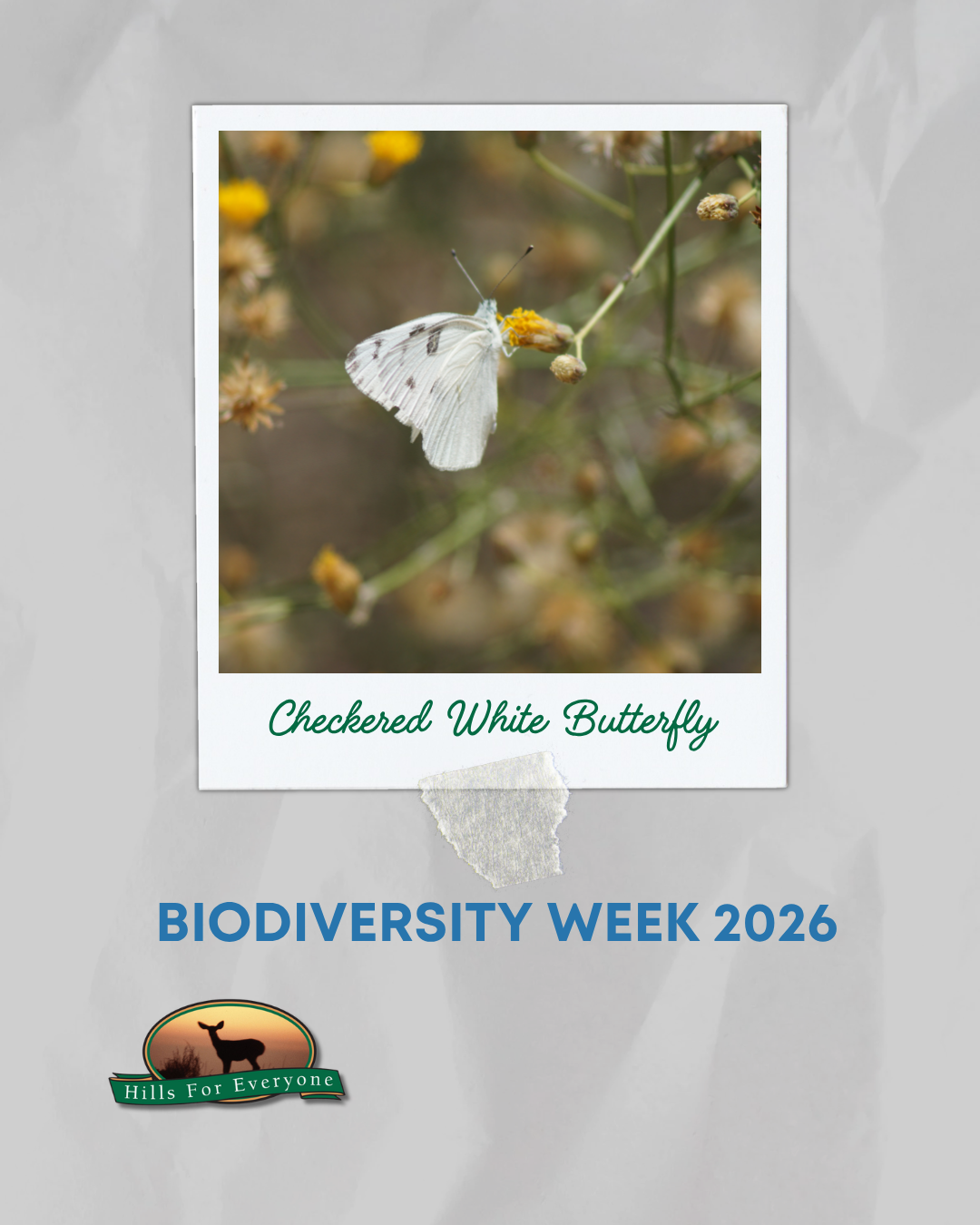
Day 4: Cabbage white butterflies are small, pale butterflies often seen in gardens, fields, and open spaces. They drink nectar from flowers and can help with pollination. Their caterpillars eat plants in the mustard family, including cabbage and broccoli.
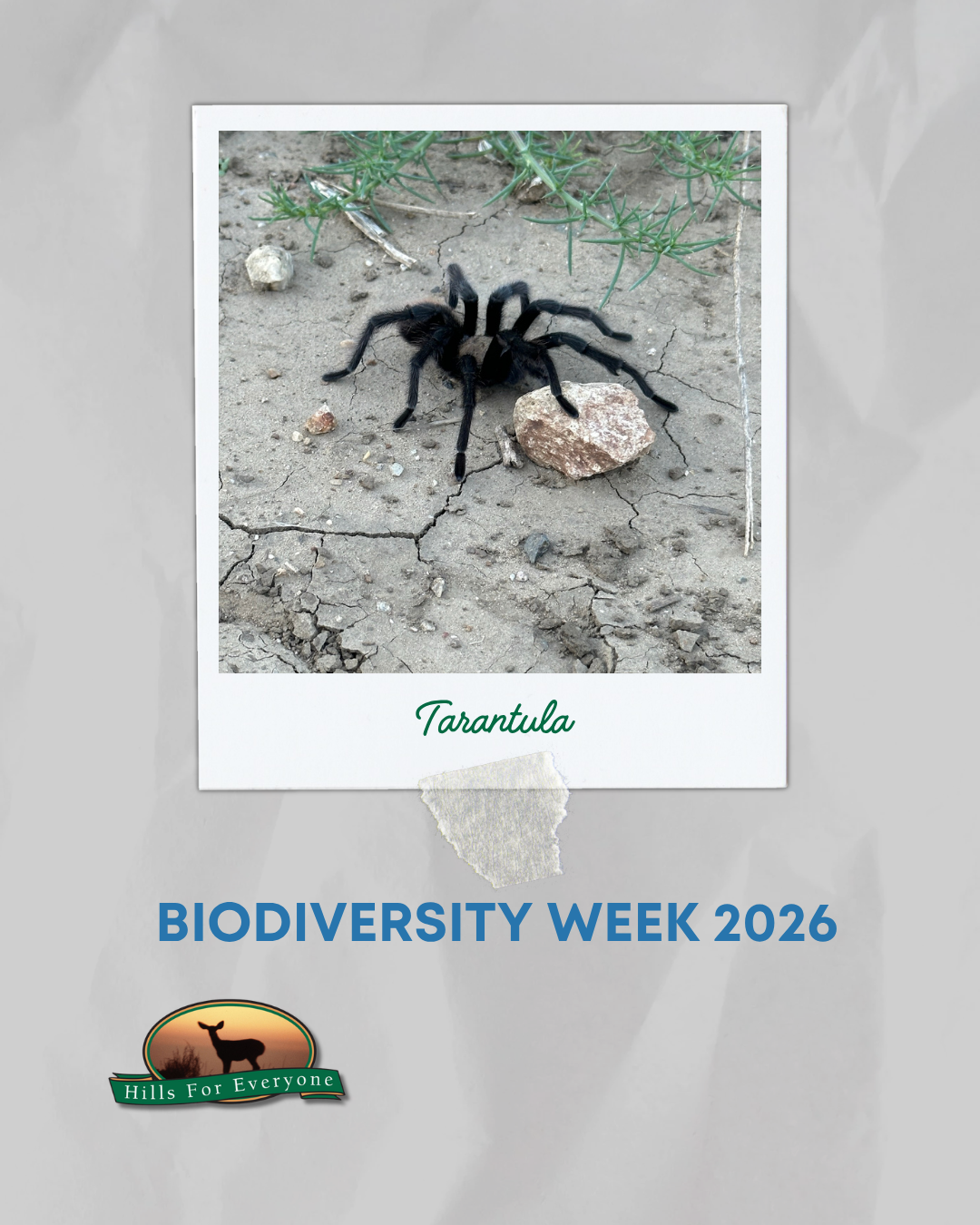
Day 5: Tarantulas are large, shy spiders that help control insects and other small animals. They are an important food source for birds, reptiles, and mammals. Despite their scary look, tarantulas usually avoid people and rarely bite unless handled.
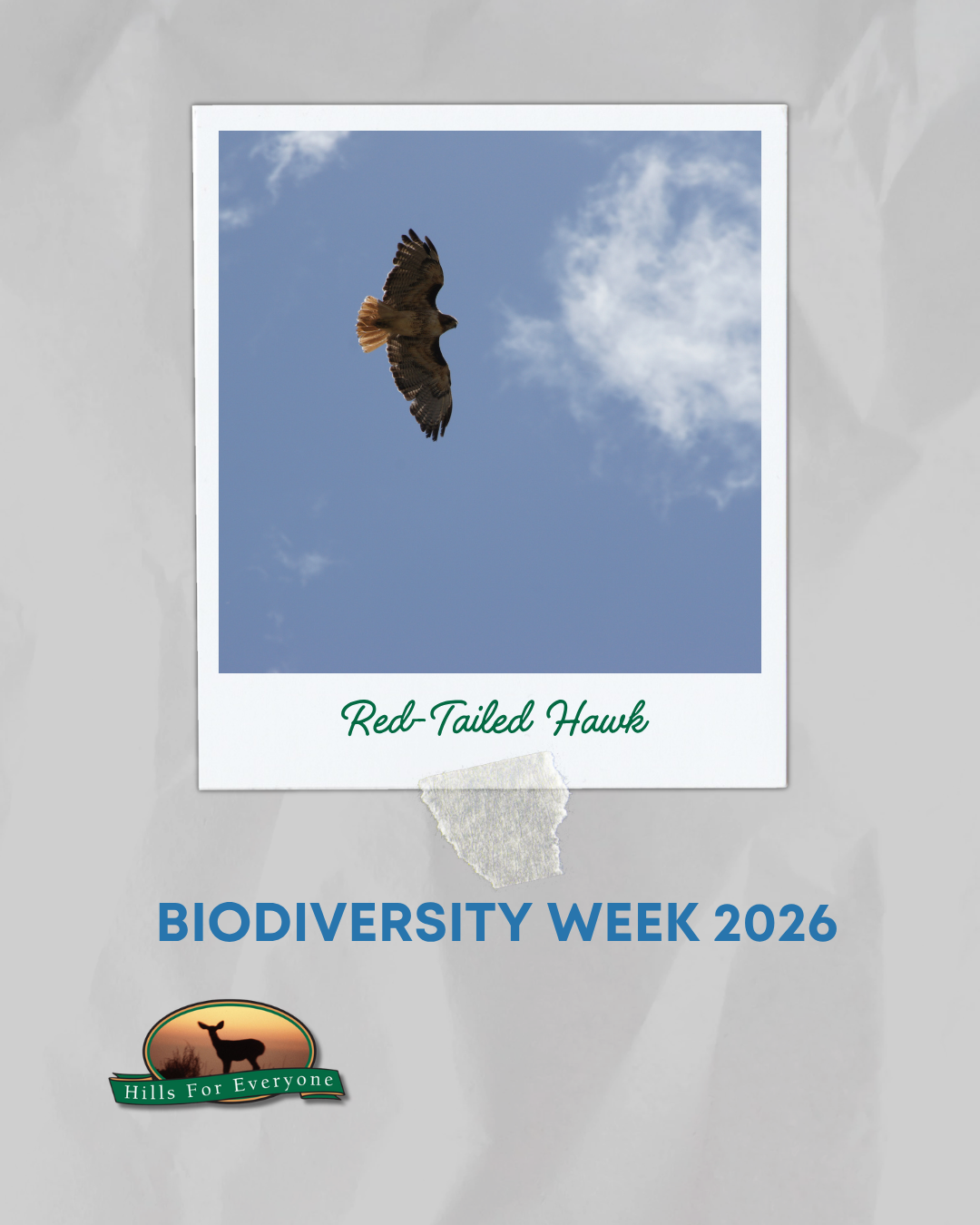
Day 6: Red-tailed hawks soar over open spaces, watching for small mammals, reptiles, and other prey. By hunting rodents, they help keep ecosystems in balance. Their broad wings and rusty-red tail make them one of California’s most recognizable birds of prey.
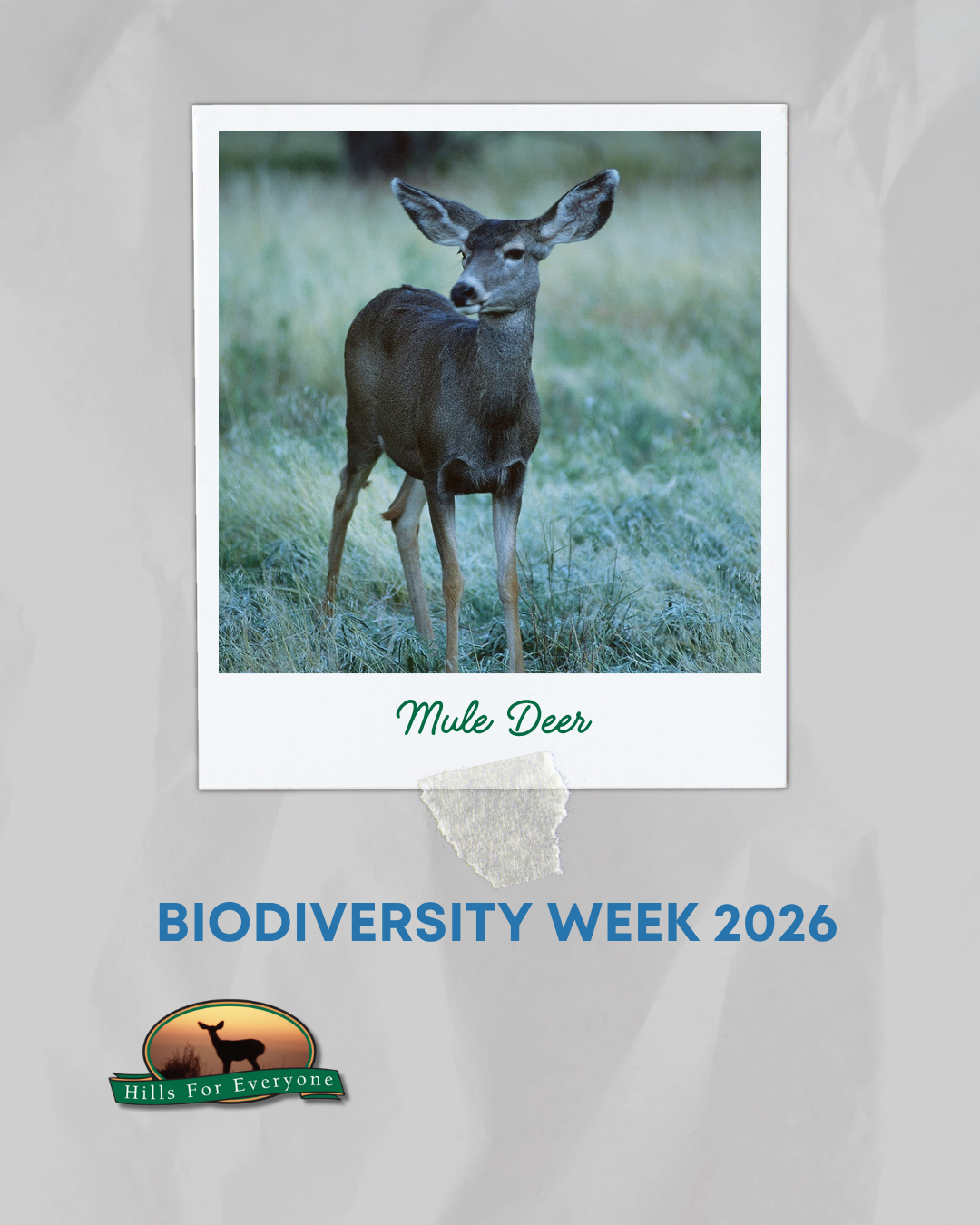
Day 7: Mule deer browse on grasses, leaves, and shrubs, helping shape the plants around them. They provide food for mountain lions, coyotes, and other wildlife. Their large ears and bounding “mule kick” make them easy to recognize in California’s hills and open spaces.
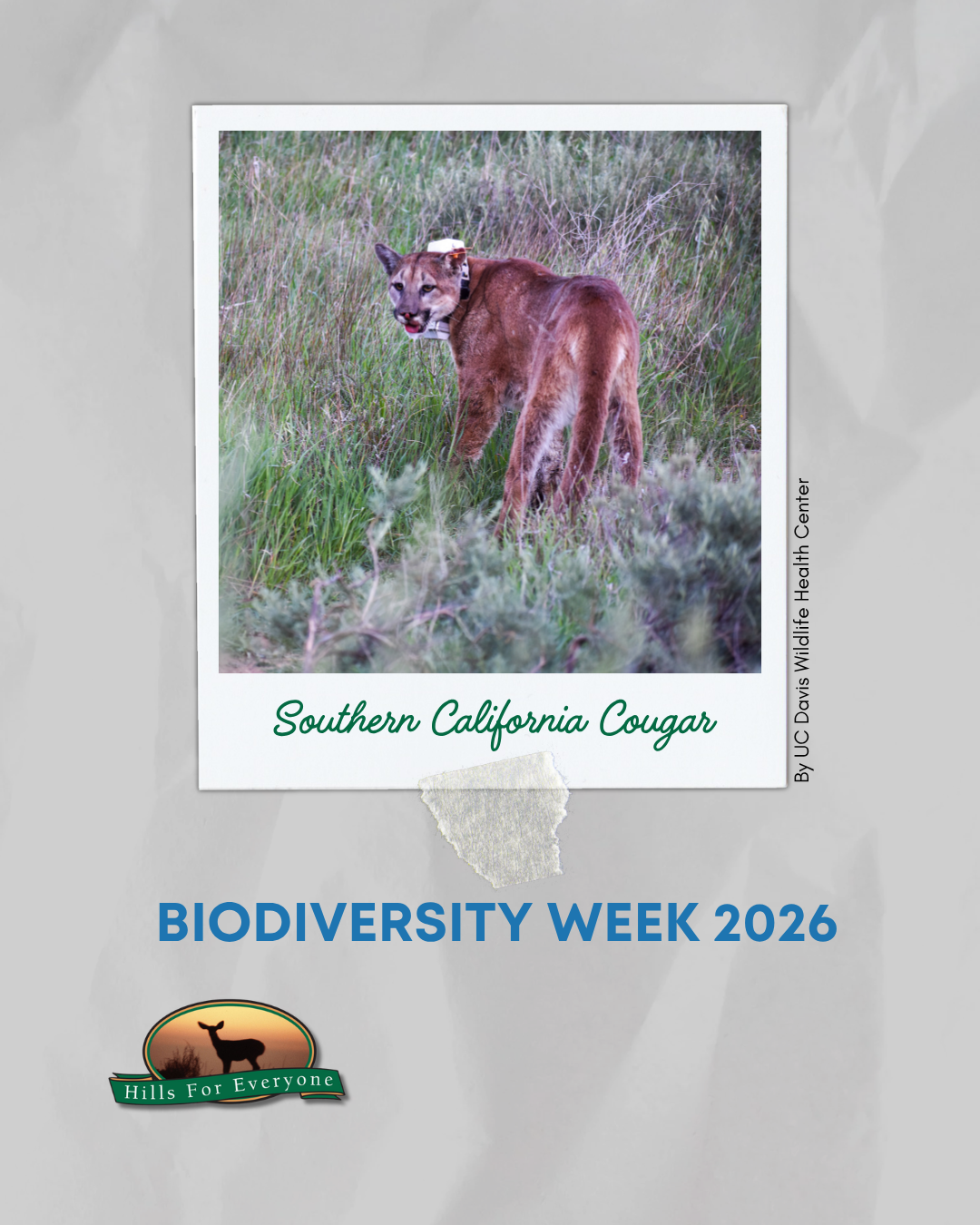
Day 8: Cougars are powerful predators that help keep deer and other prey populations in balance. They need large, connected wild places to roam, hunt, and raise their young. Protecting cougars also protects the many plants and animals that share their habitat.