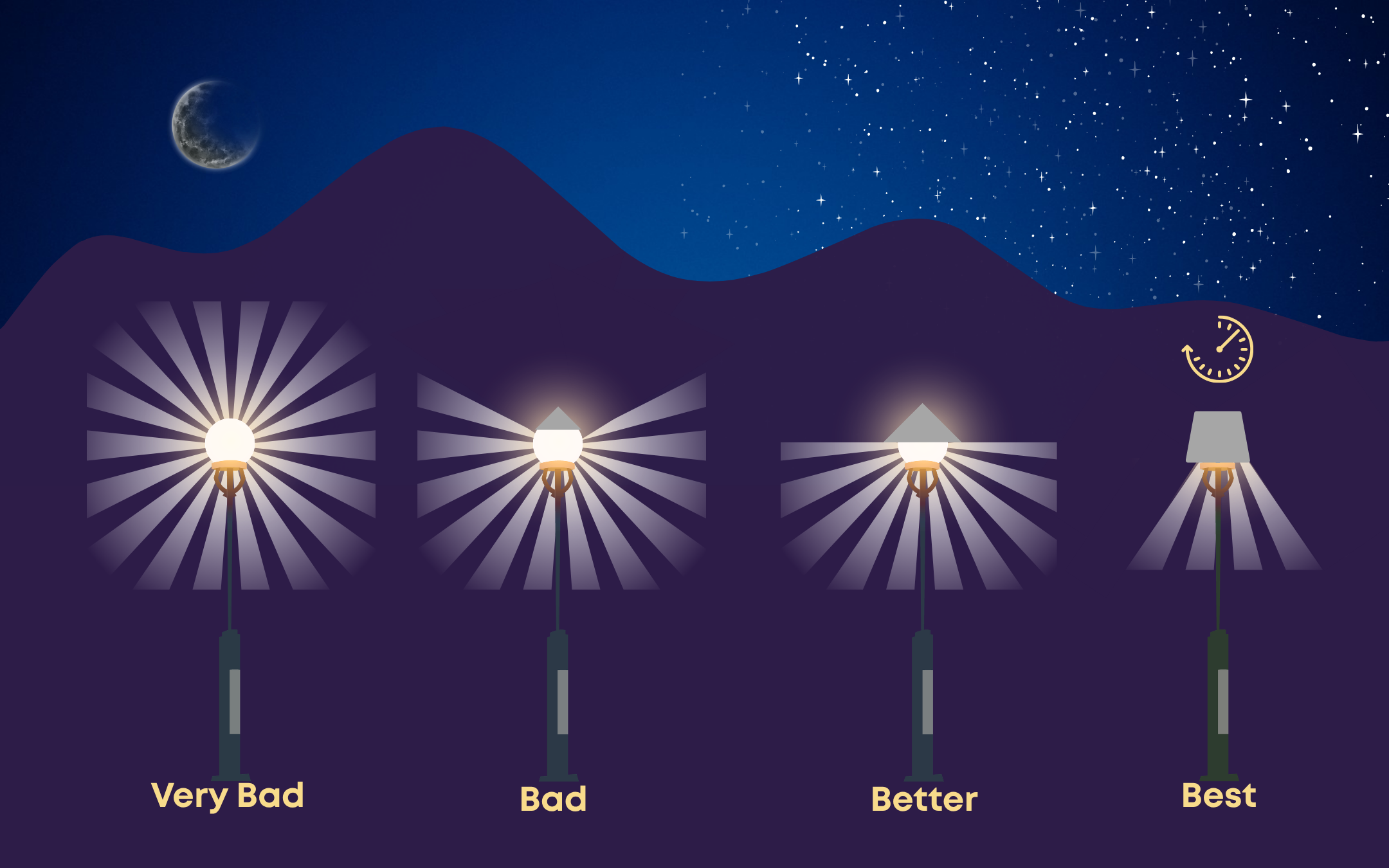
Dark skies are more than beautiful—they’re essential. Natural darkness lets wildlife migrate, hunt, and breed without harmful glare, keeping ecosystems in balance. For people, less artificial light at night means better sleep, lower energy bills, and healthier, more sustainable communities.
For home lighting that protects dark skies, think “lower, warmer, and downward.” Here are some tips:
Choose fully shielded fixtures that hide the bulb and aim light straight down, not out or up into the sky.
Look for “DarkSky Approved” or dark sky compliant lights, and pick warm colored LEDs (2700K–3000K or amber) instead of harsh blue white bulbs, which are harder on wildlife and our sleep.
Add timers or motion sensors so lights are on only when they’re truly needed.
A quick night time “lighting walk” around your home can reveal which fixtures are shining into the sky or neighbors’ yards—those are the ones to shield, dim, or turn off.
Learn more from Dark Sky International.